The Savoury Shelf: Layering Plant-Based Umami Into Dark November Cooking

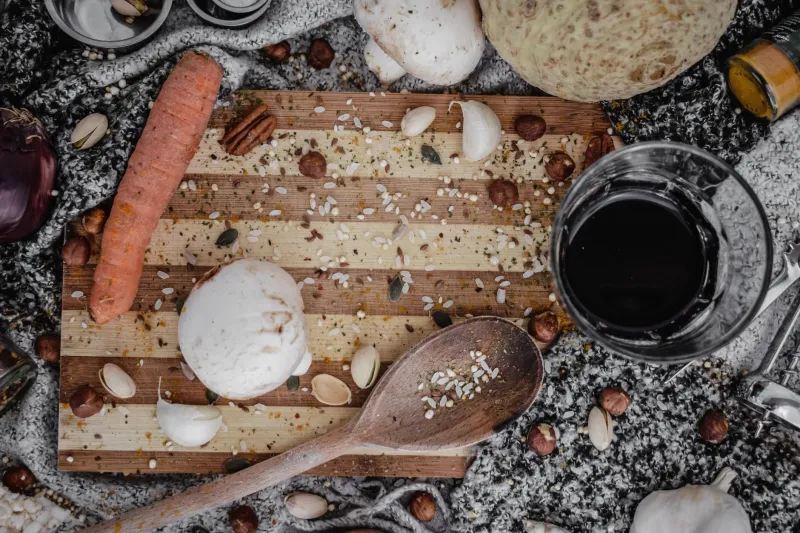
Photo: Marmite jar miso paste dried mushrooms nutritional yeast soy sauce seaweed on UK kitchen counter, via prod-spinneys-cdn-new.azureedge.net
November cooking has a particular job to do. The light is thin, the evenings are long, and the food needs to feel grounding without being heavy. For plant-based kitchens, that often means chasing umami: the savoury, mouth-filling quality that makes a spoonful of gravy feel complete rather than merely salty. The good news is that British cupboards are already well stocked for the task. Marmite, miso, nutritional yeast, dried mushrooms, soy sauce and seaweed all pull in the same direction, but they do not taste the same. Treat them as a shelf of tools, not a single magic powder.
Start with the idea of layers, not a single hit
Umami works best when it arrives in more than one form. A stew that relies only on stock cubes can taste flat; add a little miso, a spoon of Marmite and a handful of dried mushrooms and the flavour gains width. You are not trying to make everything taste of Marmite or miso. You are giving the dish several savoury reference points: toasted, fermented, earthy, saline, rounded.
My rule for dark-weather cooking is simple: choose two umami ingredients, not five. One can be the bass note, the other the seasoning. A mushroom-heavy stew might use dried porcini as the bass and a little soy at the end as seasoning. A bean pot might use Marmite for depth and nutritional yeast for a savoury, cheesy edge. Too many strong ingredients and the whole thing turns into a debate.
What each ingredient actually does
Marmite is the most British of the set: salty, yeasty, slightly bitter and very concentrated. It suits gravies, bean dishes, mince-style mixtures and anything that needs a dark, roasted note. Start with half a teaspoon for four portions and build. It can turn harsh if boiled hard for a long time, so stir it into a little hot liquid first and add it towards the middle or end of cooking.
Miso brings a gentler fermented savouriness. White or sweet miso is softer and works in lighter broths, dressings and sauces; darker miso has more punch and suits stews, gravies and mushroom dishes. Keep it below a simmer where you can. A teaspoon per four portions is a good starting point, and it pairs particularly well with sweetness from carrots, squash or onions.
Nutritional yeast is less about deep savouriness and more about a rounded, savoury-dairy effect. It is excellent on toast, in white sauces, over pasta, and stirred into beans. Use one to two tablespoons for a sauce serving four. It is not a cheese substitute on its own, but it helps a dish feel finished.
Dried mushrooms give an earthy, woodland depth. Porcini are the classic, but dried shiitake and mixed forest mushrooms work well. Soak about 10g in 200ml hot water for 20 minutes, then use the strained liquid as part of the stock. The mushrooms themselves can be chopped into the dish. This is the ingredient to reach for when a stew tastes thin rather than merely under-seasoned.
Soy sauce is the fast fix: salty, fermented and immediate. Add it late, a teaspoon at a time, and taste as you go. It is especially useful in bean dishes, noodle broths and gravy, but it can dominate if used early and reduced. Tamari is a good choice if you want a slightly rounder flavour, and it keeps the dish gluten-free if that matters.
Seaweed is the quiet one. A small piece of kombu added to a pot of beans or a vegetable broth brings a subtle savoury backnote. It is not meant to make the dish taste of the sea. Remove it before serving, or chop it very finely if you want to keep it in. Dulse flakes can be used as a finishing seasoning on toast or potatoes, but go lightly.
Simple ratios to keep by the hob
For a gravy serving four, start with 500ml vegetable stock, one teaspoon of Marmite, one teaspoon of dark miso and a teaspoon of soy. Whisk the Marmite and miso into a little hot stock first, then add. Finish with a tablespoon of nutritional yeast if you want a thicker, savoury edge.
For a bean pot serving four, use one teaspoon of Marmite, one tablespoon of nutritional yeast and a splash of soy at the end. If the beans taste watery, add 100ml of mushroom soaking liquid rather than more salt.
For a mushroom stew, soak 10g of dried mushrooms in 200ml hot water. Use the liquid as stock, add a teaspoon of dark miso and a teaspoon of soy near the end, and skip the Marmite unless you want a darker, more robust flavour.
For toast toppings, think in small amounts. A scrape of Marmite under grilled tomatoes; nutritional yeast stirred into warm butter beans; a little miso mashed into avocado; soy and seaweed sprinkled over rice. These are not recipes so much as adjustments.
British test cases worth trying this month
Sunday gravy. Whether you are pouring it over a nut roast, sausages or mash, gravy is the easiest place to practise layering. Use the ratio above, then taste. If it is sharp, add a pinch of sugar. If it is dull, add mushroom liquid. If it is too salty, dilute with more stock rather than adding cream or oil.
A bean and root stew. Fry onions, carrots and swede, add cooked beans and stock, then stir in Marmite and nutritional yeast. Finish with a little soy. This is the kind of dinner that suits a dark Tuesday and improves the next day.
Beans on toast, upgraded. Warm haricot or butter beans with garlic, a spoon of miso and a splash of soy. Pile onto thick toast and finish with nutritional yeast. It is a small change with a surprisingly large effect.
Mushroom toast. Soak dried mushrooms, fry fresh ones until browned, then add the soaking liquid and a little miso. Spoon over toast and top with something sharp, such as pickled shallots or a squeeze of lemon. This is umami without heaviness.
Keep the shelf in check
These ingredients are powerful, and most are salty. Season with them gradually, taste often, and remember that umami is not the same as saltiness. If a dish tastes flat, ask whether it needs acidity, sweetness or texture before adding another spoonful of soy. A squeeze of lemon, a pinch of sugar or a scattering of toasted seeds can do more than a second teaspoon of Marmite.
Store opened miso in the fridge, keep dried mushrooms in a sealed jar, and buy seaweed in small amounts unless you get through it quickly. The savoury shelf is there to support November cooking, not to turn every meal into the same dark-brown flavour. Use one ingredient as the foundation, one as the finishing touch, and let the vegetables still taste of themselves.